
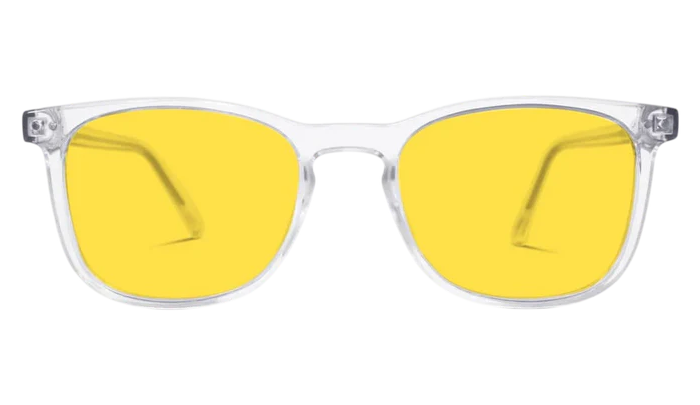
Yellow-lens daytime glasses that reduce the most straining blue light from screens and artificial lighting — without blocking the light your brain needs to stay alert and focused during the day. Built for long hours in front of screens, under office lighting, or anywhere bright artificial light causes eye fatigue.
Spending long hours under screens and LED lighting exposes your eyes to more blue light than they were designed to handle. Over time this can cause eye strain, visual fatigue, and headaches — and can make it harder to concentrate as the day goes on.
The DayMax Taylor filters 70% of blue light across the full spectrum (400–500nm) and completely blocks the highest-energy range (400–455nm) — the portion most associated with eye fatigue and discomfort from screens. At the same time, it lets through the beneficial blue light (455–500nm) that helps keep you alert and in a good mood during the day.
It's a deliberate balance: enough filtering to reduce discomfort and eye strain, without cutting off the light signals your body actually needs while you're awake and working.
A common question with daytime blue light glasses is: why not just block all blue light? The short answer is that not all blue light is bad during the day. The light in the 455–500nm range plays a role in alertness, mood, and energy — blocking it during the day can leave you feeling flat or drowsy when you actually need to be sharp.
The DayMax lens targets the specific range most responsible for eye strain and discomfort — the 400–455nm band — while preserving the rest. That's why the lens is a lighter yellow rather than amber or red. It's designed for daytime use, where the goal is reducing fatigue without interfering with how you function.
Lens: DayMax Light Yellow — filters 70% of blue light (400–500nm); blocks 100% of blue light (400–455nm). Optical-grade CR-39.
Frame: Premium lightweight acetate with spring hinges.
Also available in: Black · Pearl Grey · Tortoise Shell
Wear during screen time, desk work, or any extended time under artificial lighting through the day. These are daytime glasses — not a substitute for evening blue light blocking glasses.
For a complete routine, pair with the Nightfall Taylor (red lens) for the 1–2 hours before bed. The two glasses cover different parts of the day and work well together as part of a broader approach to light management.
Worth trying if you: